Top Apps
Upload High Quality Status
Urban VPN proxy Unblocker
Google Sheets
ElevenReader - Text to Speech
NotifyEdge - Edge Lighting
RedotPay: Crypto Card & Pay
MoneyLion: Bank & Earn Rewards
YouTube Music
Volume Control Panel
PandaVPN Pro - Fast Secure VPN
Adobe Acrobat Reader: Edit PDF
WePlay(ويبلاي) - Game & Chat
Carry1st Shop - Vouchers
Character AI: Chat, Talk, Text
Snapchat
Apps Zone
All Rights Reserved © Apps Zone 2026

Call recorder
Effortless call recording with secure storage
PkDevs Apps & Game
Review (3.7)
Reviews
+118K
Downloads
+10M
Security
Safe






Understanding the Fundamentals of Crystal Clear Call Recording
Crystal clear call recording is a sophisticated technological process centered around capturing voice communications between two or more parties in an exceptionally high audio quality format. At the core, the technology revolves around converting analog voice signals into digital data that can be stored, played back, and analyzed. This requires precise sampling rates, codec selection, and noise reduction algorithms to ensure minimal distortion and maximum fidelity. Essentially, call recording systems must manage both hardware-level audio capture and software-level signal processing to maintain clarity. For example, traditional telephony could suffer from issues such as packet loss, compression artifacts, or line noise, but modern recording technology implements adaptive bitrate encoding and digital signal processing (DSP) to mitigate these concerns, resulting in recordings that are virtually indistinguishable from live conversations. Moreover, precise timing and synchronization mechanics are necessary to accurately log call durations and metadata. Theories rooted in digital audio theory explain sample rates, like the Nyquist theorem indicating that voice frequencies can be adequately represented at 8 kHz sampling rates or higher, with 16 kHz or 44.1 kHz employed for enhanced clarity. In practical terms, this means that effective call recording apps not only create raw audio files but apply dynamic gain control, noise suppression, and echo cancellation to provide crystal clear playback. These applications also integrate with the device’s telephony stack and system permissions, ensuring secure, real-time audio interception without interrupting normal phone operations. Advanced applications incorporate machine learning models to automatically differentiate speaker voices, background noise, and system-generated sounds, enabling post-call editing that removes extraneous noise or enhances voice attributes. For example, in environments with background noise like public spaces, the recording software employs digital filters to isolate voice frequencies while suppressing non-voice sound bands, contributing to an immaculate listening experience. In industrial or business scenarios, these high-fidelity recordings are crucial for compliance, quality assurance, dispute resolution, training, and customer support. Therefore, fundamental understanding extends beyond mere audio capture to encompass the entire signal chain from voice transmission, digital conversion, signal processing, compression, storage, retrieval, and playback to achieve optimal crystal clear recording.
Technical Architecture and Features Enabling Easy Management
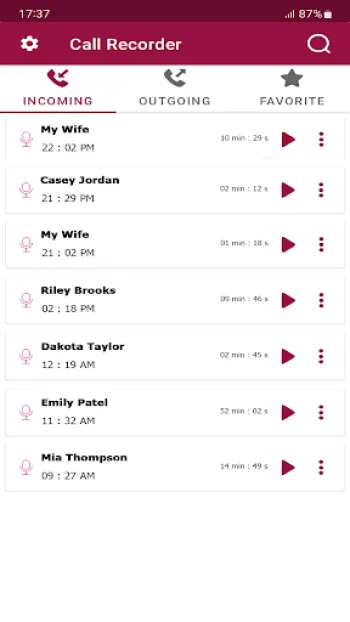
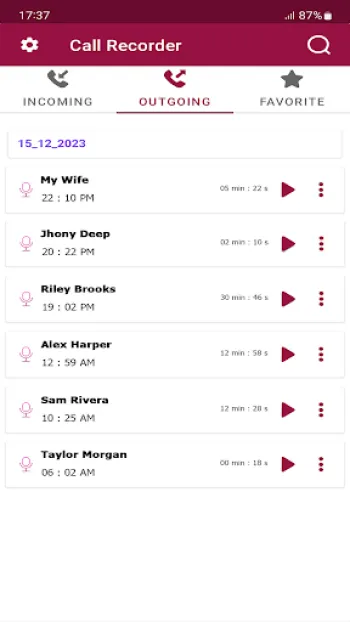
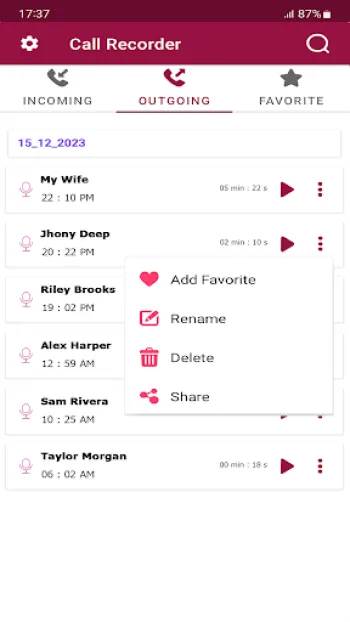
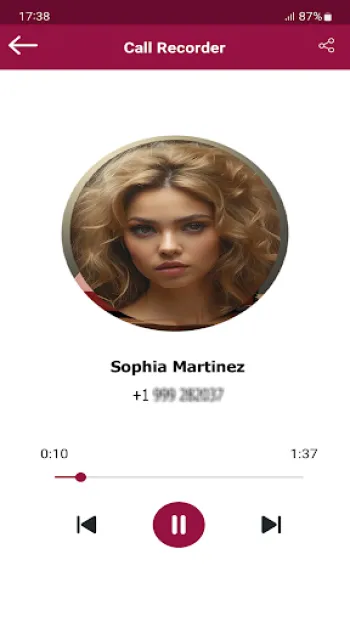
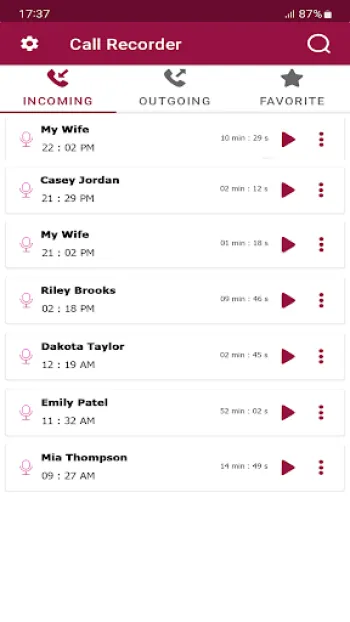
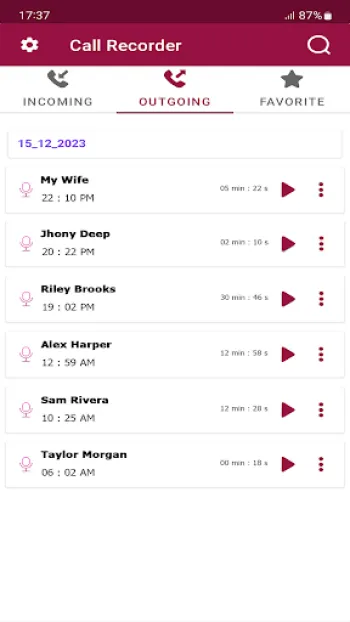
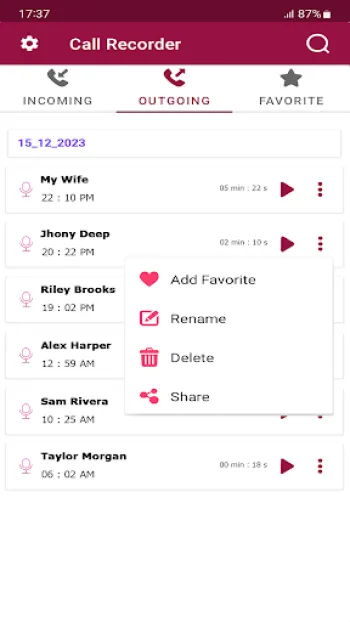
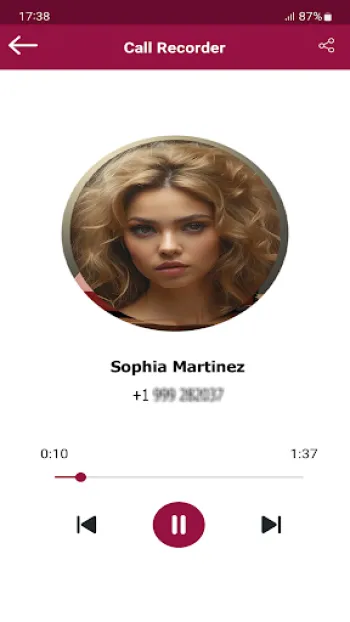
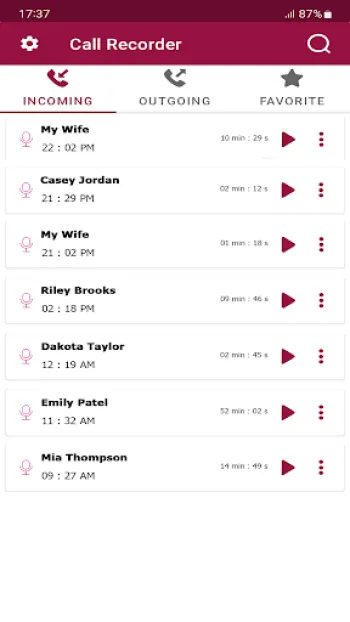
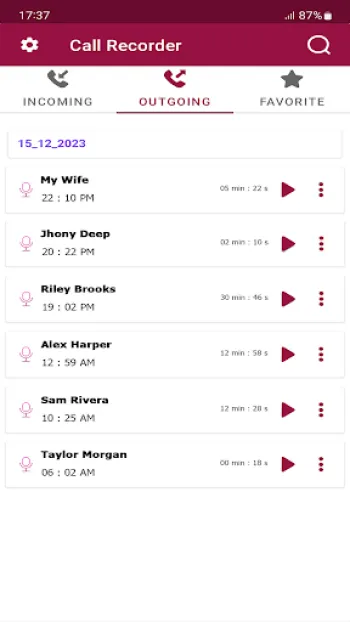
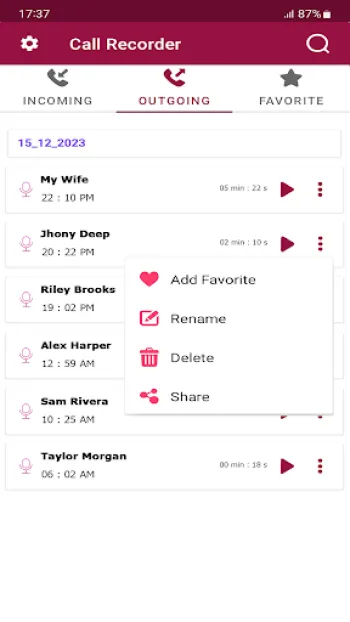
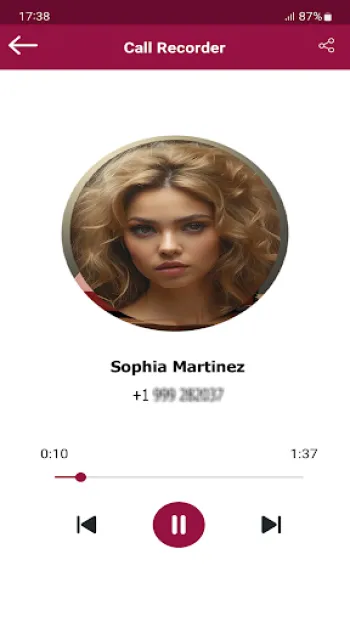
In ensuring easy management of call recordings, software architecture plays a vital role integrating flexibility, accessibility, and security through a clean user interface and robust backend processes. At the technical level, a call recorder app must manage immediate recording initiation, file handling, metadata tagging, and user interactions while minimizing resource usage on mobile or desktop platforms. The architecture typically includes modules such as a recording engine, storage manager, playback controller, tagging and categorization system, and cloud synchronization service. The recording engine interfaces with native telephony APIs or VoIP protocols to hook into the audio streams, automatically starting and stopping based on call state events. This automated approach reduces user effort, contributing to seamless operation. Storage management involves systematically saving recordings in well-organized directories, supporting options like storing on internal memory or external SD cards for expanded capacity. It handles format conversions, usually into mp3 or wav files, balancing quality and file size. Easy management also necessitates flexible sorting and filtering capabilities powered by metadata tagging such as date, time, contact name, call duration, and call type (incoming or outgoing). This metadata allows users to group and locate calls quickly without manual searching through unwieldy lists. Furthermore, important call flags and notes can be appended to recordings for future reference, an essential feature in professional contexts where specific call segments may be highlighted for compliance or legal reasons. Beyond local storage, synchronization to the cloud introduces another layer for easy management, allowing cross-device access and backup. The cloud architecture typically leverages RESTful APIs and secure token-based authentication to ensure that user data remains intact and confidential during transmission and storage. Encryption plays a key role in safeguarding recordings both at rest and in transit, using standards like AES-256 for data encryption and TLS protocols for secure connections. An integrated audio player within the app facilitates direct playback without requiring external software, supporting features like variable speed playback, bookmarks, and waveform visualizations to provide nuanced interaction with recorded content. User permissions and privacy are embedded deeply within the management framework, enabling users to whitelist or blacklist numbers to automatically record or ignore calls, further simplifying the organization and minimizing unwanted file clutter. Notifications and confirmation dialogs enhance user control by informing when recordings commence and conclude, or by prompting whether to save or discard a recording, ensuring user consent and preventing accidental data retention. Advanced management incorporates search algorithms capable of indexing transcribed text from audio through speech-to-text conversion, enabling users to find specific calls based on verbal content. In sum, the technical design of easy management systems integrates automatic call detection, intelligent organization, secure storage, and user-friendly playback into one cohesive ecosystem, reducing complexity while maximizing utility for individuals and enterprises alike.
Security and Privacy Considerations in Call Recording Applications
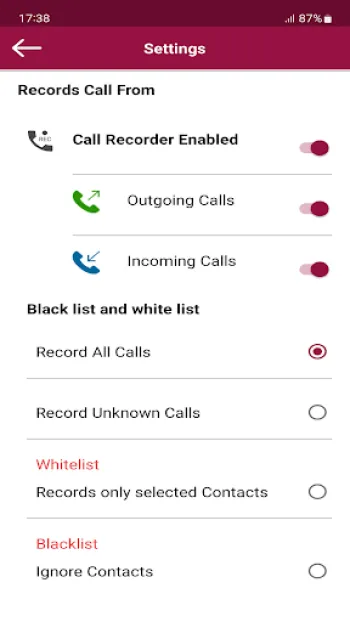
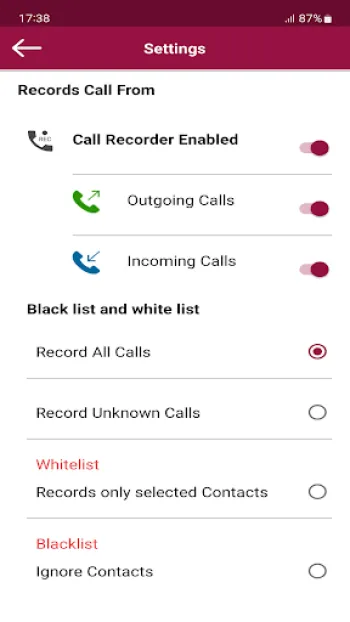
Security and privacy occupy paramount importance in the realm of call recording, given the sensitive nature of telephone conversations. Recording calls inherently involves the capture and storage of personal and sometimes confidential information, necessitating compliance with various legal frameworks and best security practices. It is crucial to understand that security measures operate on multiple levels: from data acquisition, storage, transmission, access control, to eventual deletion. Encrypted storage is foundational to protecting saved audio files from unauthorized access. Many advanced call recording solutions employ symmetric encryption algorithms such as AES-256, providing a strong barrier against data breaches, ensuring that even if storage media are compromised, recordings remain unintelligible without proper keys. Encryption is carried not only at rest but also in transit when synchronizing files to the cloud or sharing recordings via email or messaging services. Transport Layer Security (TLS) protocols create encrypted tunnels for data exchanges, protecting against man-in-the-middle attacks and interception. Access control mechanisms build upon authentication protocols requiring users to log in with secure credentials, ideally backed by multi-factor authentication (MFA) to mitigate credential theft risks. Some applications incorporate biometric verification like fingerprint or facial recognition, marrying convenience with increased security for accessing sensitive recordings. Additionally, call recorders often implement granular permission models allowing users to whitelist trusted numbers whose calls are always recorded or blacklist numbers to avoid recording private or sensitive conversations inadvertently. Compliance with privacy laws such as GDPR, CCPA, or local telecommunication regulations dictates informed consent practices, where users are notified and granted options regarding recording activation. Failure to comply can result in serious legal repercussions. Thus, software often integrates confirmation dialogues post-call prompting users whether to save recordings, respecting privacy choices. From a technical standpoint, sandboxing features at the operating system level prevent other apps from accessing call recordings, and the use of secure enclaves or hardware-backed key storage enhances protection against malware or unauthorized access. Logging and audit trails provide transparency by recording who accessed, shared, or deleted recordings, which is essential in corporate environments needing accountability. Moreover, users can employ password locks within recording apps, encrypting the application interface itself to prevent unauthorized opening. Secure deletion algorithms ensure that when recordings are deleted, they are purged securely beyond recovery by overwriting storage sectors multiple times. Importantly, storage location flexibility, such as choosing between internal memory and external SD cards, factors into security considerations, as removable media are more susceptible to loss or theft. For applications syncing recordings to multiple devices or cloud platforms, end-to-end encryption can be employed for added layers of privacy. Lastly, educating users about safe practices—like avoiding recording calls involving third-party consent violations or disclosing sensitive data unnecessarily—contributes significantly to an overall secure usage environment.
Advanced Functionalities and Customization Options in Modern Call Recording Apps
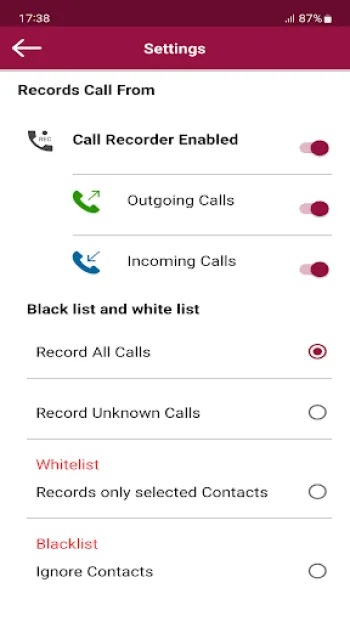
Modern call recording applications go far beyond mere capturing of voice to provide sophisticated functionalities and extensive customization options, catering to diverse user needs ranging from casual to professional uses. One prominent advanced feature is selective recording, wherein users can configure the app to automatically record only specific contacts or numbers included in a whitelist, or inversely exclude numbers placed in a blacklist. This functionality ensures efficient storage use and privacy compliance by filtering out irrelevant calls. Integration with contact lists offers enhanced identification whereby incoming or outgoing calls are tagged with caller information, often presented in-app to contextualize recordings. On the technical side, applications support multiple audio formats such as MP3, WAV, or M4A, allowing users to prioritize between quality and storage space. Flexible encoding options, including bitrates and sample rates, enable fine-tuned control over audio fidelity and file size, catering to users with varying hardware capabilities and storage constraints. Another advanced modality is real-time call recording control where users can pause, resume, or stop recordings mid-call, which is critical in conversations involving both public and private segments. Post-call, users can edit audio files, trimming unnecessary parts or inserting annotations. The app often includes a built-in audio player that supports features like speed modification for faster reviews or looping specific sections for thorough analysis. Metadata tagging and organization tools facilitate quick search by time, date, contact, or custom tags, enabling streamlined archival especially important in legal or business environments where record retrieval can be crucial. Automatic transcription harnesses AI-powered speech recognition to convert voice into searchable text, significantly augmenting usability by enabling keyword searches across large repositories of recordings. Further, integration with cloud services provides resilient backup and multiplatform synchronization, permitting access across smartphones, tablets, and desktops. Such cloud integration often incorporates privacy safeguards including encrypted transfers. Customization extends to user interface themes, notification settings controlling when recording alerts appear, and the ability to enable or disable call recording on a per-call basis or globally. Security customizations such as password protection on the app or individual files allow users to restrict unauthorized playback. Additionally, the app can generate summaries at call completion, notifying users of recording status, file name, duration, and storage location, enhancing transparency and user feedback. Another practical feature involves external storage support allowing recordings to be saved on SD cards if internal memory is limited, adding flexibility particularly on devices with restricted onboard capacity. Accessibility features like integration with voice commands and compatibility with screen readers ensure the app is usable by a wider demographic. On a societal level, call recording applications include consent reminder popups or audible beeps to inform parties of ongoing recording, aligning the app with legal guidelines and ethical standards. Overall, modern call recording solutions are not only about recording but about empowering users through extensive control, intelligent automation, and adaptable configurations to meet evolving communication and documentation needs.
Use Cases, Applications, and Practical Benefits of High-Quality Call Recording
The practical deployment of crystal clear call recording technology finds diverse applications across personal, professional, and corporate domains, each capitalizing on the fidelity and management capabilities to enhance communication efficacy and compliance. In personal contexts, high quality recordings allow individuals to preserve important conversations, from family discussions to memoranda of verbal agreements. For example, users who need to recall instructions, confirm travel arrangements, or revisit emotional exchanges benefit from clear, unambiguous replays. Moreover, the ability to archive and organize such recordings facilitates easy retrieval, which is invaluable in disputes or for sentimental preservation. In small to medium businesses, crystal clear call recording is fundamental for quality control in customer service. Organizations rely on recorded calls to monitor agent performance, ensuring adherence to scripts and professional conduct. The metadata tagging and searchable transcripts enable training departments to highlight exemplary calls or identify areas for improvement. These recordings serve as irrefutable evidence during customer complaints or investigations, significantly reducing ambiguity. Legal firms commonly use call recording as part of evidence collection processes, leveraging high audio fidelity to preserve exact words spoken during consultations or dispute negotiations. The clarity and secure storage provided by advanced call recorder applications guarantee that such recordings stand up under legal scrutiny. Beyond compliance, crystal clear recordings aid in dispute resolutions by offering concrete data in contractual disagreements or warranty claims. In sectors like finance and healthcare, call recording ensures adherence to regulatory mandates such as MiFID II or HIPAA, mandating that client interactions involving sensitive or transactional information are recorded securely and retrievably. The ability to use cloud synchronization means these records can be centralized, saved indefinitely, and audited seamlessly. The app’s easy management features reduce administrative overhead by automating call filters, annotations, and backups, allowing compliance officers to focus on analysis rather than data handling logistics. Sales and marketing departments use call recordings for coaching, campaign optimization, and deriving customer insights by analyzing conversational patterns and objections. AI-powered transcription and keyword tagging empower data mining efforts on recorded calls, uncovering trends and enhancing product development feedback loops. Furthermore, remote and distributed teams utilize high quality call recording to bridge communication gaps, functioning as asynchronous documentation supporting cross-timezone collaborations. For example, international project teams can review discussions without attending meetings live, ensuring knowledge retention and timely responsiveness. The integration with external storage options enables large scale archival for enterprises needing extensive storage capacity without sacrificing device performance. Additionally, secure password and encryption measures protect these critical archives from unauthorized access, balancing usability and security demands. Overall, crystal clear call recording combined with effortless management transforms telecommunication from a transient moment into a permanent, utilizable asset, underpinning transparency, efficiency, and trust across numerous real-world applications. Users interested in employing such comprehensive solutions can Download for Android to experience seamless call capturing backed by smart management and secure storage.
Share Your Opinion
Your Email Will Not Be Published.
























All Rights Reserved © Apps Zone 2026
Nuri Bilal
thise app is goode but How can he listen to the voice record? Can you help me please
Devon Mc lennon
I absolutely love this app. It's very user-friendly.
Martin Neshkovski
It is an app for displaying ads. No other functionality inside. As an advertisement rotator it does great job. You can barely see the app interface...
Ernest Clegthorpe
Used this app in the past and was generally satisfied with it, sometimes the other party was recorded too quietly though. Having just installed aga...
Mcdonald Okarter
The app looks good indeed, but it records without audio. It has no audio setting facility. How do I handle this all-important issue to be at home w...