Top Apps
WiFi Analyzer: Speed Test
Fast Budget - Expense Manager
All Sats Frequencies - WikiSat
Music Maker & AI Vocal Remover
Audio Convert Text Transcribe
Prayer Times and Qibla
Voice Changer & Sound Effects
Adblock Fast Browser Pro
Dating and Chat - iHappy
Adobe Express: AI Photo, Video
Cash Prizes - Earn Money App
Mail: Email, Cloud, Calendar
Vmake: AI Talking Video Editor
TorrDroid - Torrent Downloader
Edraak
Apps Zone
All Rights Reserved © Apps Zone 2026

My Rusty Car
Embark on a unique vintage car driving adventure
MadStorm
Review (5.0)
Reviews
3K
Downloads
+10K
Security
Safe
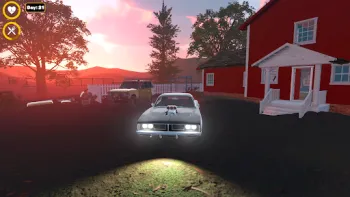
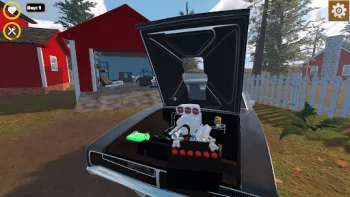
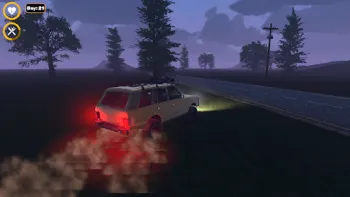

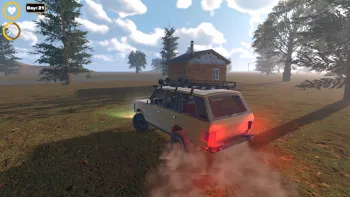
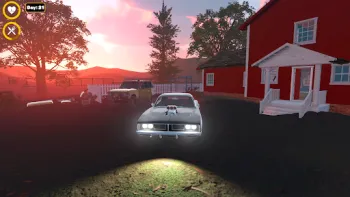
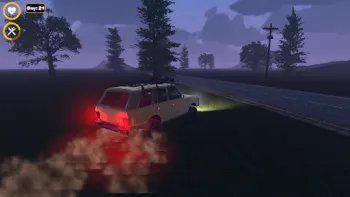


The Essence of Rusty Car Classic Driving Adventure: A Unique Blend of Driving and Survival Simulation
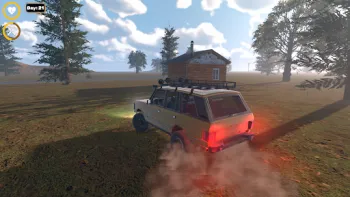
Rusty Car Classic Driving Adventure is an innovative driving and survival simulator that transcends traditional racing or adventure games by intricately weaving the themes of endurance, resource management, and vehicle maintenance into one immersive experience. At its core, the game presents a concept where the open road becomes more than just a pathway; it is a protagonist itself — a dynamic, evolving environment filled with challenges and opportunities. Players engage deeply with their surroundings, not merely to reach a destination faster, but to survive within a rustic, dilapidated vehicle that carries them through endless terrains. This driving model is built with precision, where the physics of an aging car are simulated in minute, realistic detail. Unlike many driving games which focus on speed or flashy stunts, Rusty Car demands careful attention to the mechanics of your car’s operation. Players must continuously monitor vital indicators such as oil levels, coolant temperatures, and fuel reserves, blending theoretical automotive knowledge with applied survival strategies. For example, if oil pressure drops drastically without immediate top-ups, the engine may seize, ending the journey prematurely. This principle echoes the delicate balance required in real-world classic car maintenance, where neglect can rapidly compound wear and tear. Beyond engine performance, the game emphasizes the importance of scavenging skills; scavenging abandoned roadside houses and forsaken structures introduces a wave of risk and reward typical of survival scenarios. Not only must players locate containers of fuel, oil, or spare parts, but they navigate the subtle tension of whether to explore dangerous environments or conserve energy by pushing onward. There is an inherent learning curve in understanding which environmental cues hint at possible resource caches and which areas might be too hazardous or unpromising. The day/night cycle adds layers of complexity and immersion, shifting driving mechanics and visibility parameters and influencing scavenging strategies. At night, both mechanical issues and reduced visibility amplify risk, requiring players to adapt their tactics accordingly—balancing progress with safety. This natural rhythm not only affects survival but establishes a meditative, almost hypnotic cadence to the gameplay, captivating players who appreciate nuanced, slow-burn challenges. From a technical perspective, the game’s physics engine meticulously simulates suspension responsiveness on uneven surfaces, tire traction varying based on terrain, and engine degradation over time, demanding a versatile driving skillset. Mastery involves learning how to handle the rusty car’s quirks: the sluggish acceleration, tricky steering responsiveness, and sudden vulnerabilities under strain. This authentic vehicle behavior contrasts sharply with the polished feel of modern racing games, bringing players closer to the tactile experience of classic car operation under difficult conditions. The psychological interplay between trust and fragility in the relationship with one’s car drives engagement. The car is your only companion in a vast and desolate world, making every maintenance decision meaningful and tension-filled. This unique fusion of simulation and survival, layered within a scenic yet unforgiving environment, sets Rusty Car Classic Driving Adventure apart as a deceptively deep and richly textured experience. It revitalizes appreciation for classic cars and their fragile beauty, encourages strategic thinking, and invites players to lose themselves in the meditative pulse of the endless road.
Building and Maintaining Your Rusty Car: In-Depth Vehicle Customization and Mechanical Strategy
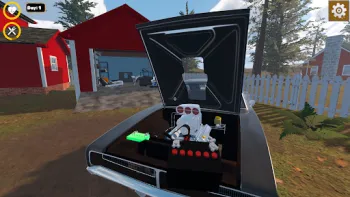
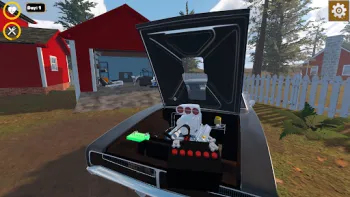
Central to Rusty Car Classic Driving Adventure is the mechanical complexity and customization capability offered to players, emphasizing detailed vehicle assembly and maintenance as pillars of surviving the relentless journey. From the outset, players are tasked with constructing their vehicle piece by piece: selecting chassis frames, engines, gearboxes, suspension setups, and tire options, each element intricately affecting the car’s performance and durability. This mechanical decomposition transforms what could be a straightforward driving game into a comprehensive engineering exercise. For example, choosing a heavier chassis may grant increased durability at the cost of fuel efficiency, while opting for a lighter build may compromise protection but improve speed and fuel consumption. Engine selection influences torque curves and maintenance intervals, and players must balance their preferences with the scarcity of necessary replacement parts encountered during scavenging. This interdependence of parts mirrors real living mechanics that classic car enthusiasts encounter when performing restorations or modifications, adding an authentic flavor that heightens immersion. Maintenance mechanics in Rusty Car are comprehensive and demand constant vigilance. Players can examine oil viscosity, pump fuel lines, check coolant radiators, and replace worn-out parts, each task requiring both time and resources. Oil contamination or fuel degradation due to scavenged supplies adds unpredictable variables, sometimes forcing improvisation such as purifying fuel or performing jury-rigged repairs under adverse conditions. The game's survival simulation merges intimately with these mechanics, as neglecting maintenance penalties manifest in reduced engine output, increased chances of breakdowns, or even complete failure. These failures are not abrupt but come with precursors like warning lights and performance drops, inviting players to develop a sense of mechanical intuition. Strategic decisions become crucial: does one risk venturing into more dangerous terrain in search of a rare radiator cap or spend time carefully maintaining the engine and hope to avoid trouble? The scavenging aspect compliments the building mechanic by requiring players to recognize potential parts and supplies scattered in abandoned buildings, roadside dumps, or even inside derelict vehicles. The game's environmental design supports this by offering visual and auditory clues—such as faint glimmers of metal under debris or unusual noises—that reward curiosity and reward risk-taking. Furthermore, the level of technical detail extends into the real-time simulation of vehicle dynamics, where factors like tire wear due to rough terrain, brake fluid levels, and battery charge affect drivability. Adaptive weather conditions that impact road friction and engine temperature management further augment the replicative experience, requiring players to constantly adjust their driving style and mechanical upkeep. Players engaging with these multilayered vehicle systems inevitably deepen their understanding of classic car mechanics and the challenges faced by automotive restorers under real-world conditions, marrying practical knowledge with engaging gameplay. By painstakingly assembling, maintaining, and repairing their vehicles, players essentially build not just a mode of transportation but a lifeline—a fragile yet resilient partner in an uncertain voyage. This complexity creates an evolving bond, narratively and functionally richer than mere vehicle usage, demonstrating the game's distinctiveness within the driving and survival simulation genre.
Survival Mechanics and Resource Management: Navigating the Challenges of a Post-Industrial Landscape
Rusty Car Classic Driving Adventure extends beyond driving and vehicle maintenance into encompassing a multifaceted survival framework that holds players accountable for every aspect of their journey. The survival elements weave seamlessly into the driving experience by emphasizing scarcity and the impermanence of resources in a post-industrial landscape laden with abandoned structures and silent roads. Players must navigate an austere environment where food, fuel, replacement parts, and essential fluids are far from guaranteed, transforming resource management into a strategic, almost tactical facet of gameplay. The core survival loop involves persistent monitoring and repair of the vehicle alongside sustaining the driver’s condition by scavenging and efficient usage of found resources. Unlike traditional survival games with explicit health or stamina bars, the precarious status of the car doubles as an extension of the player's survival, forcing attention to both mechanical and human necessities. Scavenging is detailed and immersive. Players explore myriad relics of a forsaken civilization—crumbling houses, rusted-out containers, submerged gas stations, and wild overgrowth concealing hidden supplies. The process requires an astute observational approach: recognizing which containers might hold clean fuel, understanding degradation signs in stored food, and even detecting traps or instability within derelict buildings. The dynamic procedural generation of supplies ensures unpredictability, pushing players to learn and adapt scavenging routes continuously while balancing risk and energy expenditure. Resource management blends pragmatism with suspense. Fuel must be rationed carefully, as running out in the middle of a barren stretch spells doom. Maintaining coolant and oil levels affects the engine’s life span; neglect can lead to catastrophic engine failure. Occasionally, the game introduces environmental hazards—extreme weather, rough terrain, or wildlife—that impact resource consumption rates or damage potential. These survival aspects are underpinned by detailed systems simulating decay rates, contamination potentials, and item durability, encouraging players to prioritize high-value items and consider trade-offs. There’s an element of improvisation encouraged as well—players may choose to cannibalize parts from other abandoned vehicles, jury-rig temporary fuel lines, or repurpose found materials to patch up their ride temporarily. Such solutions carry variable success rates and usually come with trade-offs, adding layers of decision-making reflective of real-world survival scenarios. The interaction between day/night cycles and survival strategies is also significant. During daylight, visibility and scavenging options improve, but the player uses more fuel due to higher speeds or longer travel times. Nighttime introduces a trade-off with a more fragile vehicle state and reduced visibility, urging slow, cautious driving or finding safe shelter, which itself involves resource use and potential hazards. For hardcore survival enthusiasts, these mechanics foster an experience where every choice echoes into the future—speeding recklessly risks a breakdown far from aid, while conservative play may prolong survival but test patience and resource limits. Through this carefully constructed survival ecosystem, the game models ecological and human-system dependencies in a beautifully desolate world. Players who approach it with genuine curiosity and strategic foresight find it intellectually stimulating and emotionally resonant, evoking a profound respect for human ingenuity, resilience, and the slow march of decay that characterizes both machinery and nature in tandem.
Exploration and Environmental Immersion: Experiencing a Forgotten World on Wheels
Exploration forms the heartbeat of Rusty Car Classic Driving Adventure, enveloping players in an expansive, hauntingly atmospheric world where every mile traversed unveils a narrative of abandonment and resilience. The game’s setting—a desolate landscape littered with ruins, overgrown roads, and forgotten relics—acts as a character itself, rich with untold stories embedded in the environment’s fabric. It invites players to become slow travelers, tuning their senses to nuances that might otherwise be overlooked in faster-paced driving or action games. The procedural yet meticulously designed world includes variable biomes, ranging from dense forests and arid plains to dilapidated urban outskirts, each presenting unique challenges, sights, and scavenging opportunities. The interplay of dynamic weather and a realistic day/night cycle drastically shapes exploration dynamics, transforming familiar landmarks under varying light conditions and weather patterns. Morning fog thickens visibility, softening colors and muting sounds, whereas harsh midday sun highlights details such as rust patterns on abandoned vehicles or the glisten of oil spills on cracked asphalt. Evening fades into cool hues, and nighttime plunges the landscape into shadows, altering not just the visual experience but also driving physics and survival risks. Beyond visual immersion, environmental audio design furthers this atmospheric realism. The crunch of gravel under tires, distant wildlife calls, creaking wood of ruined buildings, and the constant hum of the aging engine stitch seamlessly together to evoke a meditative sensory space, encouraging deep engagement. Traveling the roads is less about speed and more about profound encounters with silence, solitude, and subtle cues within the environment. The game’s world design incorporates hidden points of interest—ancient signposts, lost campsites, or broken-down fuel stations—that reward exploration by offering rare supplies or serving as narrative clues. These waypoints create a nonlinear story told through spatial encounters rather than dialogue or cutscenes, letting players infer histories of the world through observation and interpretation. Technically, the game employs an efficient world streaming system that handles vast terrain instantiation without compromising performance, supporting uninterrupted exploration across varying terrains and harsh weather. This continuity, coupled with advanced lighting and particle effects, heightens believability and player immersion, essential for a game that thrives on atmosphere. The driving experience itself is carefully tuned to integrate exploration and environment. Slowing down to navigate treacherous off-road paths or taking detours to scavenge forces a contemplative pace, reinforcing the emotional tone of a nostalgic, post-apocalyptic road trip. Moments of calm settling in the cockpit juxtapose starkly with the ever-looming dangers of mechanical failure, creating a balanced rhythm of tension and release. For players interested in classic cars, this exploration becomes a poetic journey. The rusted vehicle they operate is a tangible relic, a time capsule blending organically with the environment. The interplay between machine and nature shown in the dilapidated roads and overgrown scenery provides a powerful visual metaphor about time, decay, and endurance—concepts that deeply resonate with fans of vintage automotive culture and open-world exploration alike.
Accessibility and Platform Integration: Bringing the Rusty Car Experience to a Wide Audience
Accessibility and broad platform integration are key aspects that enable Rusty Car Classic Driving Adventure to reach and engage diverse player communities, offering a rich experience regardless of hardware preferences or player experience levels. The game’s development emphasizes smooth performance and intuitive controls, aiming to lower barriers often associated with detailed survival and simulation titles, which can sometimes appear daunting to newcomers. Controls are thoughtfully designed to replicate the tactile feel of classic car driving, balancing realistic steering sensitivity with customizable input options. Players can adjust control schemes to suit everything from gamepads to keyboard and mouse setups, facilitating ease of use without sacrificing mechanical fidelity. This inclusivity extends to visual and audio accessibility settings that allow tuning of brightness, color contrasts, and ambient sound volumes to better accommodate different play styles and physical needs. Another dimension of accessibility lies in the learning curve. The game provides subtle in-game guidance and tutorial segments that do not overwhelm or handhold players but rather encourage experimental learning. This approach opens the experience to both veteran drivers or survival sim enthusiasts and casual players curious about vintage car culture or atmospheric exploration games. On the technical front, Rusty Car’s architecture supports integration across multiple platforms, with an optimized Android version accessible via mobile devices, allowing on-the-go immersion without compromising key features of vehicle maintenance and survival. The game’s efficient use of system resources ensures stable frame rates even on mid-range devices, preserving visual fidelity and control fluidity. While the current iteration is primarily available on Android—accessible through Download for Android—future expansions and ports are anticipated to extend its reach following community feedback and demand. Cross-platform aspirations also highlight potential gameplay enhancements through cloud saves and synchronized profiles, enabling seamless transition from mobile to desktop environments once released. The emphasis on platform versatility alongside thoughtful game design reflects a strong commitment to community building around the niche genre of classic car survival adventures. By opening doors to wider demographics, Rusty Car Classic Driving Adventure not only enriches the driving game landscape but creates a shared cultural space where players can appreciate mechanical intricacies, environmental storytelling, and survival challenges in diverse contexts. This dedication to accessibility combined with rich simulation content provides a sustainable model for future updates and expansions, ensuring that the journey along the rusty road continues to inspire and challenge players worldwide across their preferred platforms.
Share Your Opinion
Your Email Will Not Be Published.






















All Rights Reserved © Apps Zone 2026