Top Apps
OldRoll - Vintage Film Camera
ChatGPT
Anti Spy Detector - Spyware
Socialist | Get Fast Followers
Weather data & microclimate :
Profile tracker
iTranslate Translator
Fidelity Investments
Phone Cleaner - All in one
Discord - Talk, Play, Hang Out
Weather & Clock Widget
ONLYOFFICE Documents
GIPHY: GIFs, Stickers & Clips
سعر الذهب و الدولار اليوم
Ai Chatbot - Pro
Apps Zone
All Rights Reserved © Apps Zone 2026

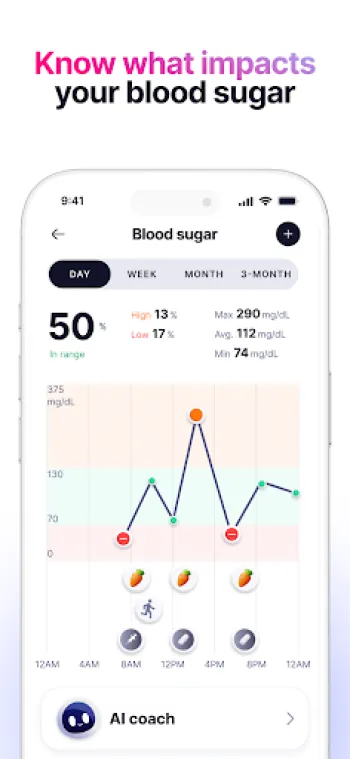
Elfie - Health & Rewards
Capture, Live, and Share Your Moments Creatively
Elfie. Get better!
Review (3.8)
Reviews
+3K
Downloads
+1000K
Security
Safe







The Evolution of AI Integration in Photo Sharing Platforms
The integration of artificial intelligence (AI) into photo sharing platforms marks a revolutionary leap in how users interact, create, and disseminate visual content. Historically, photo sharing was a manual and static process, rooted predominantly in simple uploads and sharing mechanisms. However, with rapid advancements in AI technologies such as deep learning, computer vision, and neural networks, these platforms have transformed into dynamic environments that not only store images but actively enhance, categorize, and personalize the content for each user. The AI algorithms can automatically adjust lighting, detect faces, suggest optimal compositions, and even remove unwanted objects, empowering users with professional-grade photo edits without any technical expertise. More than just tools for image manipulation, AI-powered platforms analyze users' preferences, behavioral patterns, and social connections to provide highly contextualized content recommendations, thereby deepening engagement. AI’s role extends beyond editing; it facilitates real-time recognition and tagging, allowing seamless integration of metadata that enables highly effective image organization and searchability. For instance, image recognition can differentiate between landscapes, portraits, food photography, or artistic shots, segregating content in a way that aligns perfectly with the user’s consumption habits. Moreover, with the integration of generative AI, users are beginning to experience entirely new forms of visual content creation, such as AI-generated backgrounds or style transfers, enabling a level of personalization and creativity previously unattainable. This evolution represents not only technical innovation but a shift in user expectations and engagement strategies, where the platform’s intelligence significantly enhances the creative process, sparking a more interactive and immersive experience. The power of AI further extends to content moderation and privacy protection, where smart algorithms detect inappropriate or harmful content and automatically apply filters or generate alerts, creating a safer and more welcoming digital space. These AI capabilities also empower social features within the platform by curating social feeds and discoveries, facilitating authentic connections and community building through tailored sharing experiences. Technically, this requires robust computational infrastructures, hybrid cloud architectures, and real-time data analytics pipelines to manage and process large volumes of images, user interactions, and sensor data continuously. The synergy between AI and photo sharing thus not only optimizes the aesthetics and accessibility of content but also paves the way for novel social paradigms where creativity, technology, and human expression merge fluidly in an intelligent ecosystem.
Design Philosophy and User Experience in AI-Driven Photo Sharing
The design philosophy underlying AI-driven photo sharing platforms is deeply rooted in simplicity, creativity, and empowerment, aiming to build effortless yet profound experiences for users across all demographics. From a UX perspective, the goal is to minimize friction while maximizing the creative freedom users enjoy, made possible through intelligent automation and anticipatory design principles. Platforms embrace a user-centric approach where AI acts as a silent assistant, providing suggestions and automations without overwhelming the user interface or diminishing the sense of control and originality. For example, intelligent auto-enhance tools adjust photo attributes like brightness, contrast, and saturation based on contextual understanding, yet allow users to override these changes seamlessly. Personalized feeds, curated via AI algorithms, account not only for user tastes but also for context such as time of day, trending themes, and social interactions, thereby offering a living, breathing stream of inspiration rather than static content dumps. Designers utilize behavioral analytics to identify pain points and creatively address them through features like gesture controls, voice commands, and one-tap sharing, turning complex tasks into simple, intuitive interactions. The interface often incorporates AI-driven chatbots or virtual assistants capable of guiding new users through onboarding and continuous assistance, which significantly reduces the learning curve and promotes sustained engagement. Ethically, this design philosophy also embraces inclusivity and accessibility, leveraging AI to provide features like automated image descriptions for visually impaired users, multi-language support, and adaptive interfaces that respond to individual needs and disabilities. Technically, this demands continuous collaboration between AI engineers, UX designers, and behavioral scientists to ensure that the algorithms respect user autonomy and privacy while enhancing experience. The integration of gamification principles nurtures motivation and positive reinforcement by rewarding creative behavior, such as sharing original photos or participating in community challenges, which keeps users motivated to explore and express themselves authentically. Furthermore, the platform is designed to facilitate social interaction in a manner that fosters meaningful connections instead of shallow engagement metrics, supporting shared storytelling and collaborative content creation that elevates the communal dimension of photography. Behind the scenes, this rich user experience relies on robust AI frameworks, real-time personalization engines, and scalable cloud computing infrastructures, which together maintain high performance and responsiveness regardless of user scale or geographic distribution. Consequently, every design decision revolves around a harmonious blend of AI intelligence and human creativity, crafting a unique environment where technology empowers imagination rather than constraining it.
Technical Architecture and AI Capabilities Powering the Platform
At the heart of a unique AI-powered photo and sharing experience lies a complex and multifaceted technical architecture, blending advanced AI models with scalable cloud infrastructure, real-time data processing, and stringent security protocols. The core AI capabilities are built upon state-of-the-art convolutional neural networks (CNNs) for image recognition, segmentation, and enhancement. These models are trained on vast and diverse datasets representing a multitude of photographic styles, lighting conditions, objects, and user-generated content to ensure accuracy and adaptability. For example, the system’s image enhancement module applies generative adversarial networks (GANs) to amplify photo quality by reducing noise, sharpening details, and extending dynamic range, mimicking the input from professional-grade cameras. Simultaneously, real-time inference engines process user uploads almost instantaneously to deliver features like automatic tagging, face grouping, or scene recognition, powered by distributed GPU clusters that maintain latency below human perception thresholds. Furthermore, adaptive recommendation systems harness collaborative filtering and content-based filtering algorithms enriched with deep learning to curate personalized feeds, balancing user preferences, trending content, and social dynamics. These recommendation engines are finely tuned through reinforcement learning mechanisms that glean insights from continuous user feedback loops and social interactions, ensuring relevancy and serendipity. The platform also incorporates natural language processing (NLP) modules to facilitate intelligent search using both textual and visual inputs, enabling queries like “sunsets at the beach” or “my dog playing,” which significantly enhance discoverability. Underpinning these AI features is an event-driven microservices architecture that isolates functionalities into loosely coupled services, each scalable and maintainable independently, providing resilience and ease of innovation deployment. Data ingestion pipelines ingest metadata, user interactions, and image streams at high throughput using Kafka or similar distributed messaging systems, allowing for dynamic model retraining and analytics without disrupting user experiences. The security framework includes end-to-end encryption, role-based access control, and compliance with global data privacy standards such as GDPR and HIPAA, enforced through cryptographic techniques and secure multi-party computation when handling sensitive user data. This complex infrastructure also features continuous integration and deployment (CI/CD) pipelines enabling agile development and robust testing of AI models and platform components. From a hardware perspective, specialized inference accelerators like TPUs (tensor processing units) and ASICs (application-specific integrated circuits) increase the energy efficiency and speed of AI operations, particularly important in mobile applications dealing with limited battery and compute resources. Moreover, edge computing capabilities enable portions of AI processing to be executed directly on user devices, providing privacy benefits and reducing bandwidth demand. Overall, the platform’s technical ecosystem exemplifies a seamless fusion of AI expertise, cloud engineering, data science, and cybersecurity, delivering an unmatched photo and social experience that evolves continuously with user needs and technological advancements.
Ethical Considerations and Data Privacy in AI-Enhanced Sharing
The ethical landscape governing AI-powered photo sharing platforms is both complex and vital, as these systems handle deeply personal visual data intertwined with sensitive user behavior and social interactions. Respecting user autonomy and privacy forms the cornerstone of the platform’s ethical considerations, mandating transparent data practices, informed consent, and stringent protection mechanisms. Unlike traditional social media, where privacy concerns have often been an afterthought, AI-enhanced platforms proactively embed privacy by design, employing techniques such as data minimization, anonymization, and differential privacy to ensure that individual users cannot be reidentified from aggregated datasets. Furthermore, the platform adheres to the most rigorous regulatory frameworks worldwide, including the European Union’s GDPR, the United States’ HIPAA for health-related information, Singapore’s PDPA, Brazil’s LGPD, and Turkey’s KVKK. Achieving compliance across diverse jurisdictions requires an independent Data Privacy Officer and dedicated data privacy representatives to oversee data governance and user rights, establishing accountability throughout the data lifecycle. Beyond compliance, ethical AI principles guide the development and deployment of algorithmic systems to avoid biases and discrimination that may arise from skewed training data or opaque decision-making processes. The platform deliberately abstains from monetizing user data through advertising or selling services, thereby eliminating the incentive structures that often compromise ethical standards. Users from all health statuses are treated equally, earning rewards for engagement and health monitoring independent of their medical treatments, signaling a commitment to fairness and inclusivity. Additionally, the platform’s gamification elements are designed to promote sustained wellness without encouraging unhealthy behaviors or medication misuse, exemplifying a balanced approach between motivation and responsibility. To protect minors and vulnerable populations, age-appropriate safeguards and parental controls are incorporated, ensuring the platform does not inadvertently expose them to inappropriate content or data exploitation. Transparency is enhanced through clear communication of terms of use, data handling policies, and user rights, empowering users to make informed choices about their sharing and privacy settings. Technically, secure data storage employs advanced encryption both at rest and in transit, while cutting-edge anomaly detection algorithms identify and mitigate potential breaches or misuse. Data access logs and audit trails enable comprehensive oversight, and privacy-preserving machine learning techniques ensure that AI models can improve without compromising individual data security. Collectively, these ethical and privacy measures establish a trust foundation critical to user confidence and engagement, recognizing that technological innovation must harmonize with human rights, societal values, and legal imperatives in the evolving digital era.
Future Trends and the Expanding Horizon of AI in Photo Sharing
Looking forward, the intersection of AI and photo sharing is poised for extraordinary transformation, driven by advancements that push the boundaries of creativity, interactivity, and societal impact. Emerging trends indicate a shift towards more immersive and contextually aware experiences powered by augmented reality (AR), virtual reality (VR), and mixed reality (MR), where photos transcend static images to become interactive windows into shared moments. AI will natively integrate with AR filters and 3D modeling capabilities, enabling users to embed dynamic, virtual elements within their photos or share scenes as if co-present with others in remote locations. These innovations will pivot image sharing from a solitary act to a collaborative experience, allowing multiple users to co-create, annotate, and remix visual stories in real time. On the computational front, the convergence of AI with blockchain technology promises decentralized, tamper-proof ownership and provenance mechanisms for digital images, empowering creators with genuine intellectual property rights and new monetization pathways through non-fungible tokens (NFTs). This could fundamentally alter the economics of content creation and sharing, promoting originality and curbing unauthorized use. Moreover, AI-powered analytics will evolve to provide richer insights into emotional and social dynamics captured in images, subtly detecting moods, environmental factors, or even health indicators, potentially bridging the domains of social media and personal well-being. Privacy will remain paramount, but AI advancements in federated learning and homomorphic encryption will facilitate richer personalization and predictive features without centralized data aggregation, preserving confidentiality at unprecedented levels. Additionally, voice and gesture control interfaces will mature, enabling hands-free interactions and natural language conversations with photo sharing systems, breaking accessibility barriers and easing adoption. From a cultural perspective, as AI-generated imagery becomes ubiquitous, photo sharing platforms will adopt sophisticated authenticity verification tools that distinguish between human-produced and AI-synthesized content, maintaining integrity in an era of hyperreal visuals. The integration of AI in community moderation will further evolve, employing sentiment analysis and context-aware filtering to foster healthier, more supportive social environments. Technically, the continued miniaturization of AI accelerators and advances in 5G and beyond wireless networks will facilitate instantaneous uploads, ultra-high-resolution media sharing, and seamless synchronization across devices and platforms. These enhancements collectively herald a future where AI not only augments photo sharing but also redefines visual communication as an expressive, immersive, and ethically grounded human endeavor. Users can already begin exploring these transformative experiences through platforms offering state-of-the-art AI functionalities, including Download for Android, which showcase the pioneering integration of health-centric and creative AI-powered features that exemplify this promising frontier.
Share Your Opinion
Your Email Will Not Be Published.






















All Rights Reserved © Apps Zone 2026
Frank Michael Gamino
It is very helpful and insightful. You won't go wrong with this app.
Kelly Sai
Pretty useful app! It helps me get more disciplined in being healthier by small things such as quick checking - details info of calories by picture...
Siska Tamba
A very powerful all-in-one App with so many tracking feature in one place. It is very easy to use and the rewards system it gives out seems to be r...
Donetta Fuentes
I love this all-inclusive app. that keeps track of everything in one place. The only thing is you can tell it's based out of the UK because I have ...
Mel Nguyen
Using Elfie has allowed me to consolidate and view my health holistically. Instead of downloading and using 5 different apps, now I can track every...